
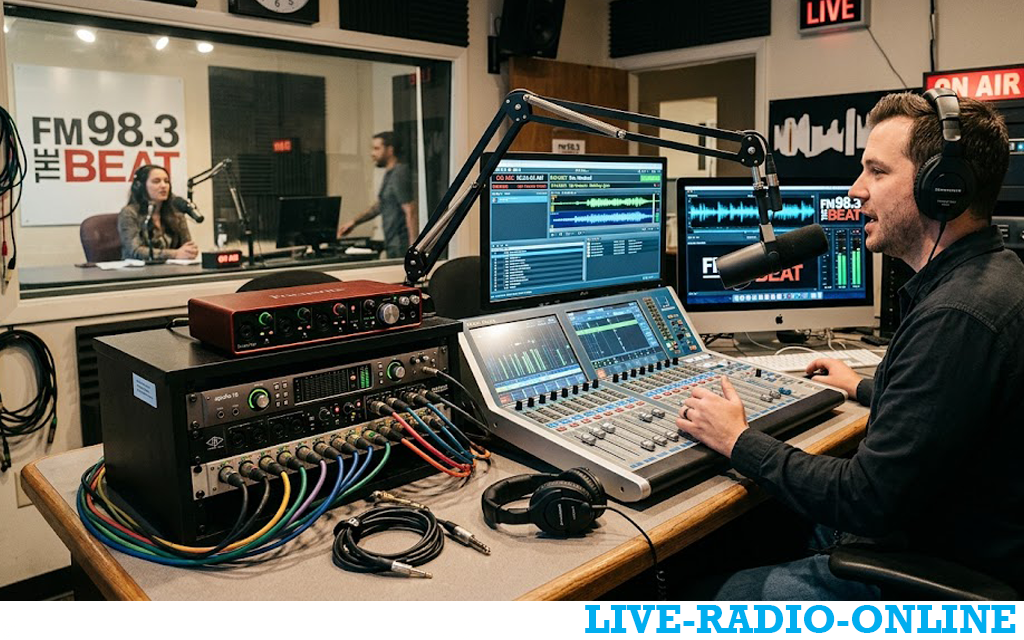
While the exact audio interface in a radio station depends heavily on budget, studio size, and network infrastructure, the equipment used by broadcasters in 2026 differs significantly from home studio gear.
High-end broadcasters are prioritizing redundancy, networked Audio-over-IP (AoIP), and seamless interoperability. The clear standout new release designed specifically to solve the "format war" between USB, MADI, and Dante is the Solid State Logic (SSL) UMD192.
Here is a breakdown of the most popular and relevant interfaces for radio stations in 2026, categorized by their primary function.
The New Standard for Broadcast Connectivity: SSL UMD192
If you want the single most timely piece of hardware for 2026 broadcast environments, the SSL UMD192 is the top contender. Released in early 2026, it is specifically engineered to bridge the gap between traditional broadcast gear and modern IP networks.
- The "Universal Translator": It converts signals between MADI (common on older consoles/studio gear), Dante (the dominant AoIP standard), and USB (for recording/playback).
- Mission-Critical Reliability: It features triple-redundant power (AC, PoE, USB) and redundant MADI/Dante ports to ensure zero downtime during live broadcasts.
- I/O Capacity: Delivers up to 192 channels at 96kHz, fitting a massive amount of audio into a compact half-rack unit
For broadcast engineers building or upgrading a facility, this interface solves the headache of getting different audio protocols to talk to each other..
The Professional Heavyweights: Consoles & Interfaces
For the core studio infrastructure, stations rely on complete systems and high-channel-count interfaces that offer stability and pristine sound.
| Product | Category | Key Relevance for Radio in 2026 |
| RME Fireface UFX III | High-End Interface | Known for extreme driver stability. Features MADI (ideal for live/broadcast), TotalMix remote control, and standalone USB recording. |
| Focusrite Scarlett 18i20 (Gen 4) | Studio Hub | Features flagship RedNet converters. Includes built-in talkback mic and speaker switching-perfect for control rooms |
| Calrec Argo M / Type R | Broadcast Console | Native IP consoles (ST2110, AES67). These are the "gold standard" for on-air mixing, now available in compact 48-fader or virtualized formats |
| Audient iD48 / ORIA | Studio Interface | 32-bit converters and 8 Class-A preamps. The ORIA model specifically supports complex surround sound setups up to 9.1.6. |
Specialized Broadcast Equipment
Beyond standard interfaces, radio stations utilize specialized hardware for calls and remote broadcasts.
- AEQ SYSTEL MAX: A next-generation call-in and multiconferencing system launched in 2026 that uses VoIP/SIP to manage up to 128 lines with Dante/AES67 connectivity.
- RDL EU Series: These wall-mounted interfaces are designed specifically for EU junction boxes, offering bidirectional Bluetooth over Dante for studios.
How to Choose for Your Station
To determine the right interface for your needs in 2026, consider these three factors:
-
Network Protocol: Are you running a Dante/AoIP network? Look for native Dante support (SSL UMD192, Calrec) or interfaces with expansion cards (RME).
- Redundancy: For on-air use, you need gear that won't fail. Prioritize units with dual power supplies or redundant network ports like the SSL UMD192.
-
Channel Count: Simple voice booths need 2-4 channels (Focusrite). Complex production or live music requires 8+ channels or MADI (RME UFX III, Audient iD48).
A Note on Entry-Level Interfaces
You will often see recommendations for devices like the Focusrite Scarlett 2i2 or Elgato Wave XLR.
These are excellent for podcast production or remote home editing, but they lack the networking and redundancy required for live-to-air broadcast studios.